CASE STUDY · PROACTIVE SETTLEMENT RISK MANAGEMENT
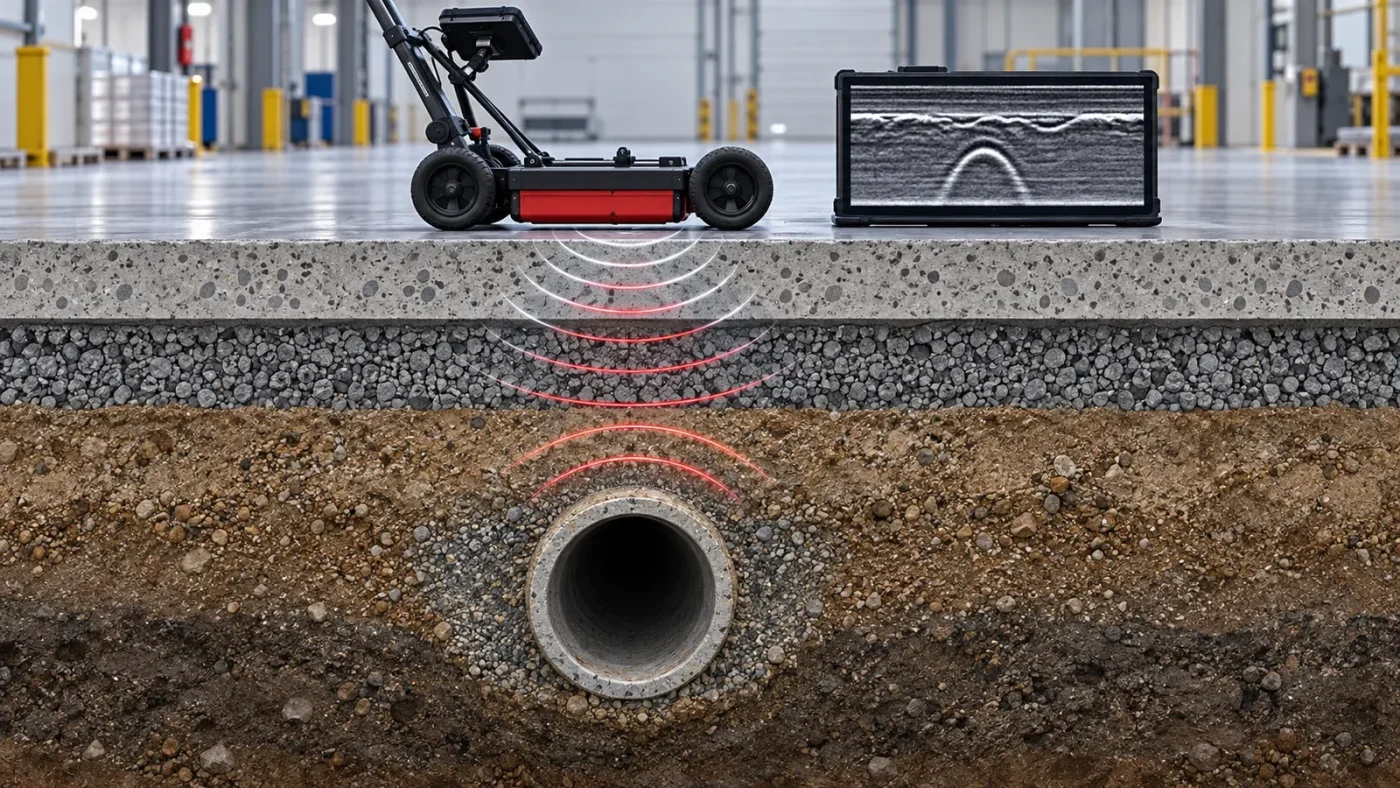
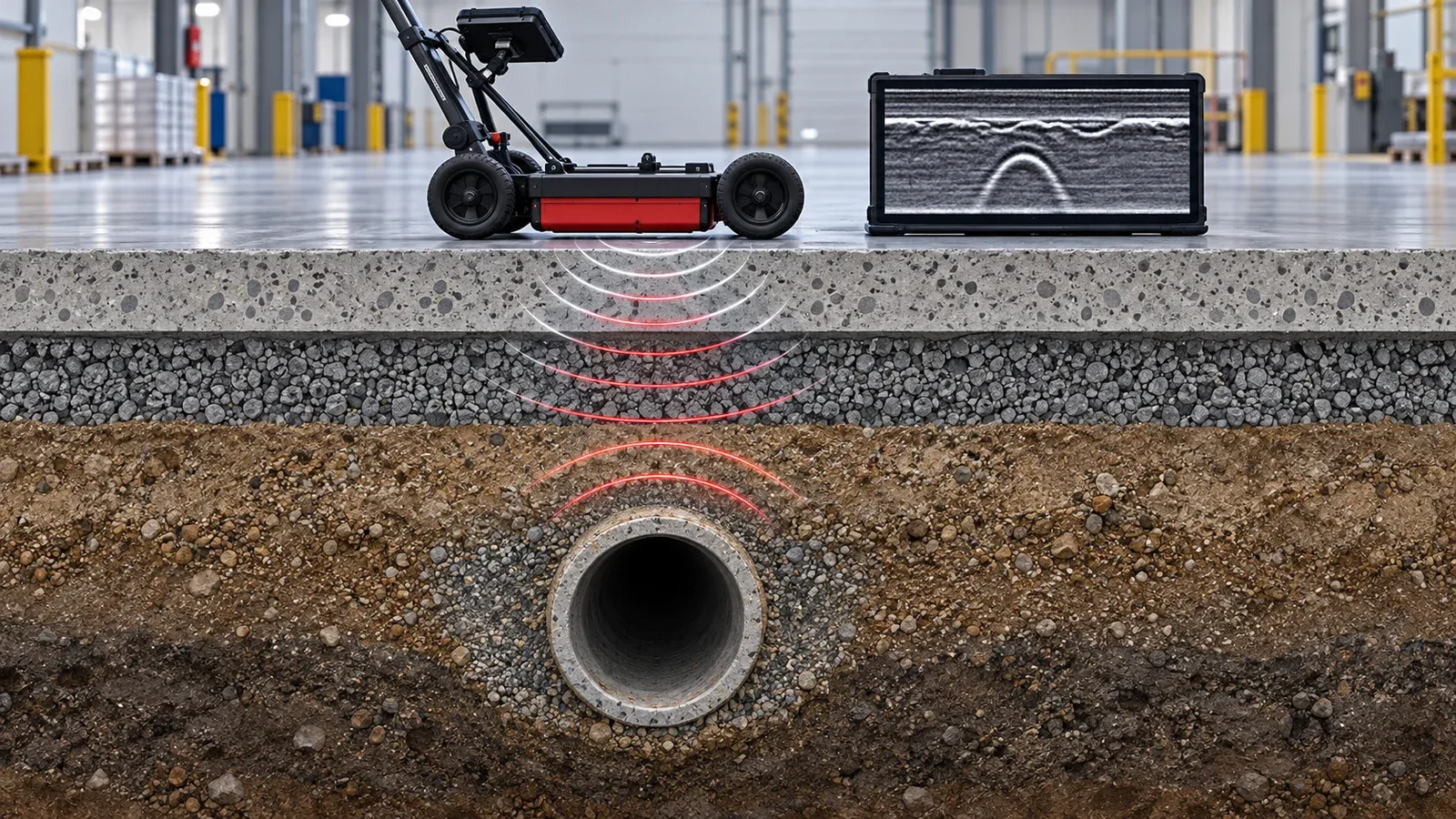
Understand the ground before treatment. At an operating facility in AMATA Industrial Park, URETEK Vietnam used non-destructive GPR around underground drainage and wastewater networks. The objective was to identify areas requiring clarification, support targeted verification planning and proactively manage settlement risk without widespread opening-up.
Settlement risk management starts with evidence
The survey covered five operating areas and reviewed high-frequency and low-frequency data together. Across the dataset, 552 scan segments were prioritised for further review. These are segments requiring technical assessment and appropriate verification—not 552 confirmed locations of settlement, defects, leakage or air-filled voids.
From GPR responses to preventive decisions
The data recorded pipe-like responses near wastewater corridors shown on drawings, response changes that may be influenced by moisture, and repeated shallow variations near the slab-to-subbase interface. Within a settlement-risk programme, these observations help prioritise locations for CAD correlation, monitoring and further verification before an intervention is selected.
Priority actions for reducing settlement risk
- correlate target locations with CAD drawings and drainage corridors;
- inspect pipes using CCTV or leakage testing at appropriate locations;
- measure moisture and compare the findings with operating history;
- use coring, borescope inspection or controlled direct checks when the condition beneath the slab requires clarification.
Read the complete GPR Survey at AMATA Industrial Park case study on URETEK Asia, including the data-review method, findings by response group, interpretation limits and verification plan.
Learn more about GPR
Review URETEK Vietnam’s non-destructive GPR survey service and the technical resource on drainage-related subsurface investigation to understand survey planning, data control, confidence-based interpretation and result verification.
Assess settlement risk proactively
If a facility shows settlement, cracking, level differences or concerns around underground services, send the available drawings, condition photographs and operating requirements. URETEK Vietnam can propose an appropriate GPR scope and verification pathway as part of a proactive settlement-risk management programme.